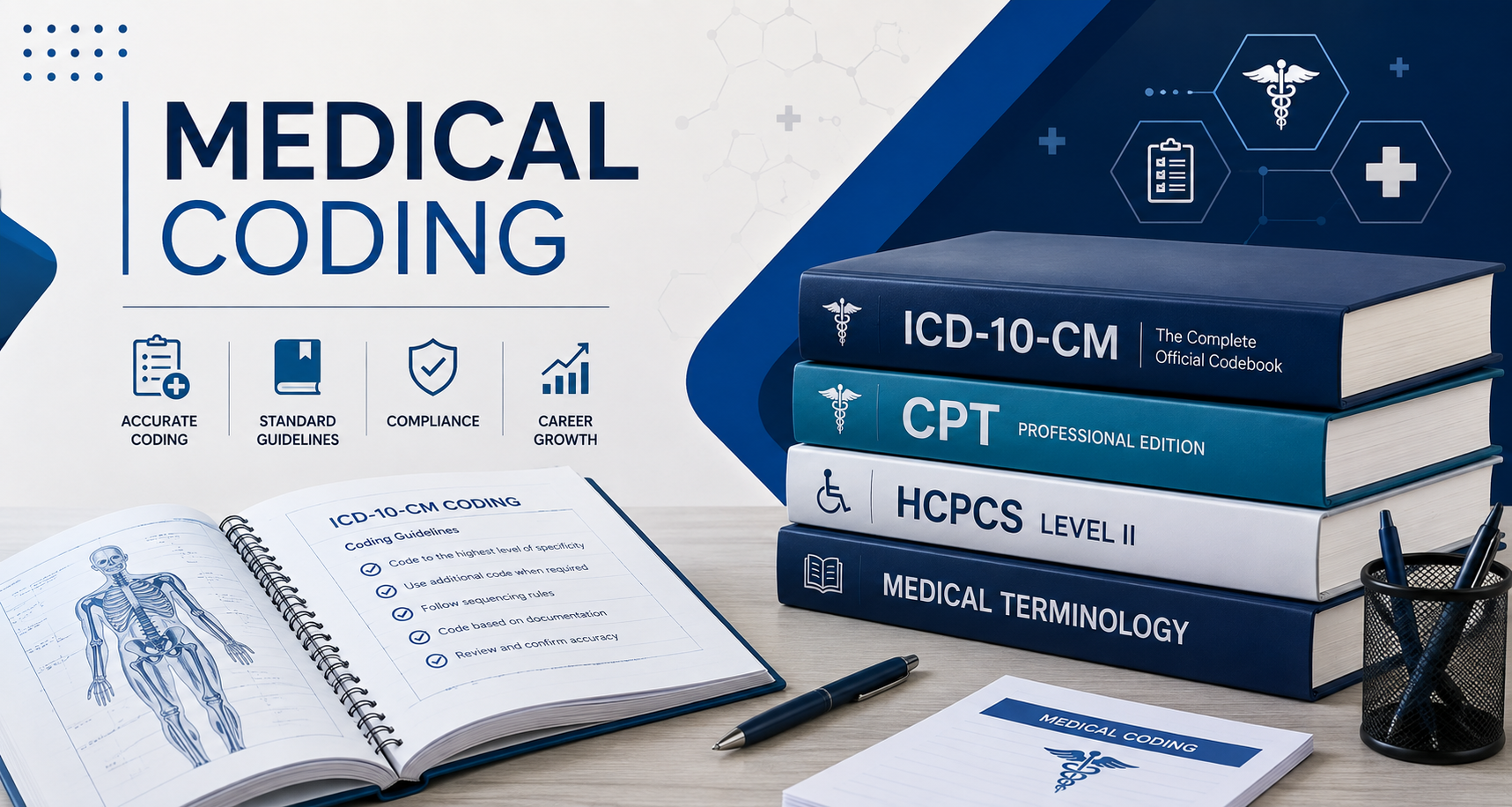
Medical Coding Training Programs
Build practical medical coding skills with structured training designed to help students and healthcare professionals understand coding guidelines, medical terminology, documentation, and real world coding practices.
Course Overview
Our Medical Coding Training Program is designed to provide learners with the knowledge and practical skills needed to understand healthcare documentation and accurately assign medical codes.
The training covers essential coding concepts, medical terminology, anatomy and physiology, coding guidelines, and hands-on coding exercises.
Build Strong Medical Coding Skills
Develop a strong foundation in medical coding through practical learning of medical terminology, anatomy and physiology, coding guidelines, and clinical documentation. Gain the knowledge required to understand patient records and accurately assign appropriate medical codes.
Prepare for Real-World Coding
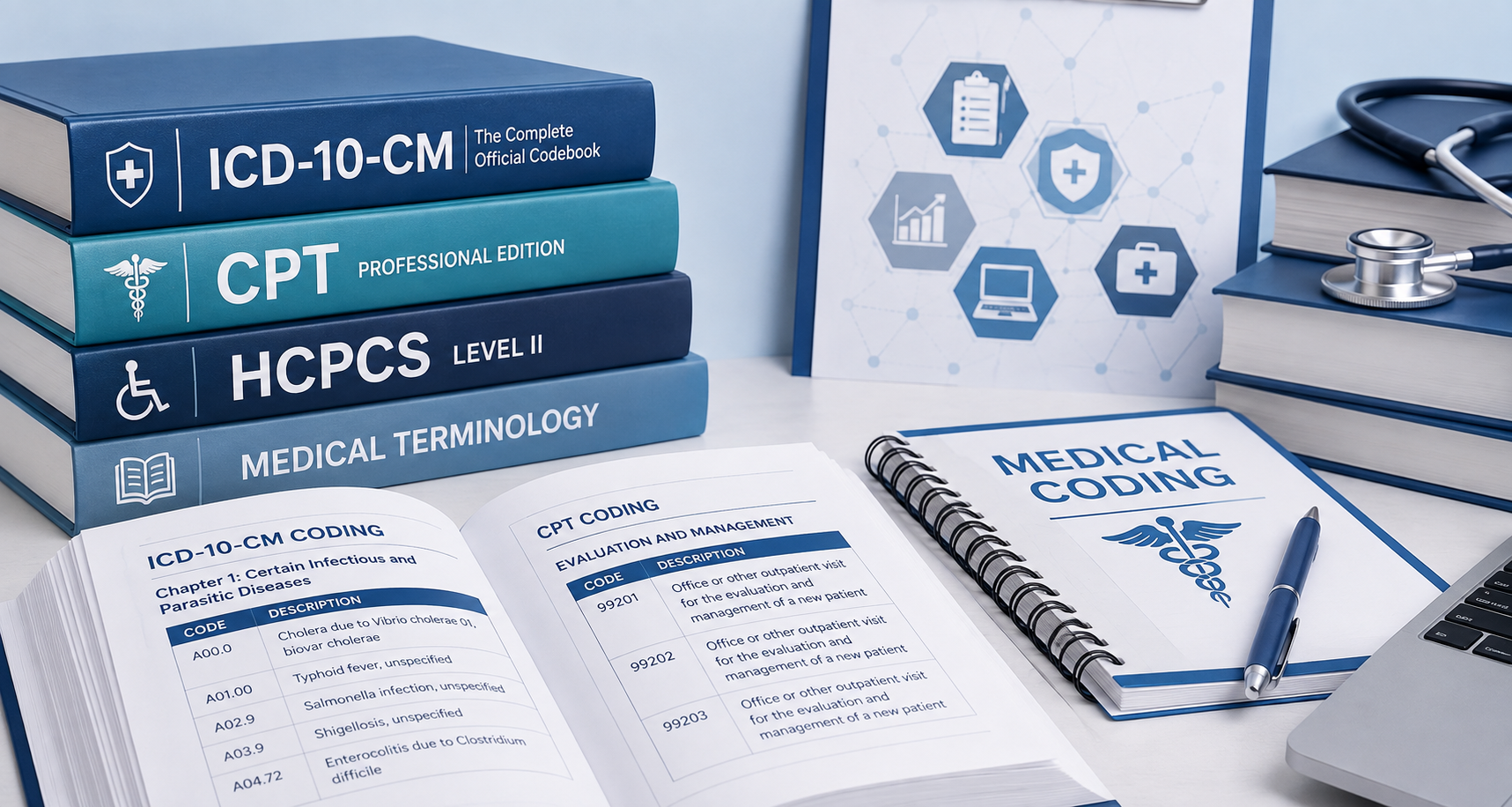
Enhance your coding skills through hands-on exercises and real-world case scenarios. Learn to apply ICD-10-CM, CPT, E/M, and HCPCS Level II coding concepts while improving accuracy, efficiency, and confidence in professional healthcare coding environments.
Tools You'll Learn
Practical Medical Coding Training.
Our training can include practical exercises based on healthcare documentation and coding scenarios. Learners can practice:
Who can join our training?
Our medical coding training can be suitable for:
Beginners interested in medical coding
Healthcare professionals
Medical coding professionals seeking additional training
Graduates
Medical billing professionals
Healthcare administration students
Professionals looking to develop healthcare revenue-cycle skills
Training Modules.
Our comprehensive training modules are designed to build strong medical coding knowledge through structured learning and practical understanding. From medical terminology and anatomy to ICD-10-CM, CPT, E/M, and HCPCS Level II coding, learners develop the skills needed to understand clinical documentation, apply coding guidelines, and improve coding accuracy for real-world healthcare settings.